Plane Crash Physics Maps and Airports Across the Series
Pick terrain, water, and Physics X airport stages so every wreck has a readable backdrop.
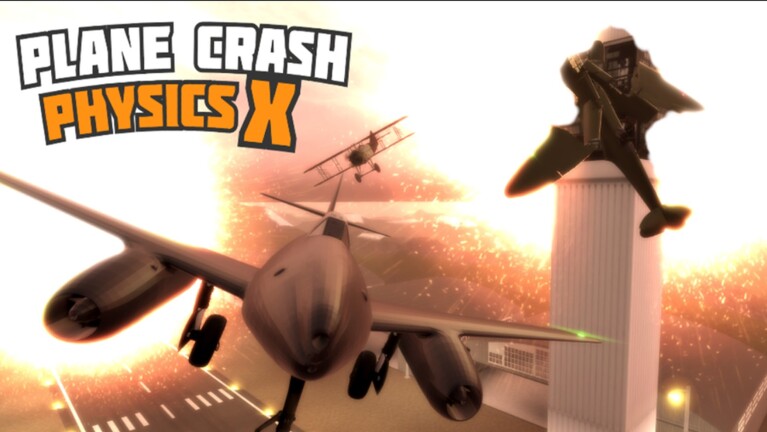
Maps decide whether your Plane Crash Physics wreck looks like a highlight or a muddy blur. The series spans three Roblox places—original Plane Crash Physics, Plane crash physics 2, and Plane crash physics X—and each one stages scenery differently. This guide explains how to choose terrain, water, and airports, then how to fly approaches that film well. Pair it with How to Fly, How to Crash, the dedicated Physics X guide, and the sibling Plane Crash Physics 2 page when you are picking a sequel for the night.
Why map choice matters
Crash sandboxes reward contrast. A wing separating against a bright runway reads better than the same breakup against dark fog. Soft hills add tumble after impact. Flat water sells ditches and floating debris. Crowded airport props on Physics X give you towers, terminals, and taxiways that turn a simple dive into a story. If you ignore scenery, you will keep blaming the airframe when the real problem is a boring backdrop.
Use the Aircraft Roster to pick a silhouette that matches the map: long airliners against terminals, fighters against open sky, helicopters against taxiways on Physics 2.
Original Plane Crash Physics maps
The May 2022 original is the classic chaotic sandbox. Expect open flight space, hills, and water that support the spawn-fly-crash loop without a formal airport career mode. Treat it as a blank canvas:
- Climb outbound until the ground texture looks clean on camera.
- Prefer daytime-feeling sessions when debris contrast matters.
- Use hills for cartwheels and flat patches for belly slides taught in How to Crash.
- Water ditches still work—aim flat, keep the camera wide, and orbit before respawning.
The original remains ideal when friends want maximum server chaos or nostalgia. Map density is lower than X, so your wreck is the hero of the frame.
Physics 2 scenery and vehicle stages
Physics 2 widens the toy box with helicopters, blimps, and cars beside planes. That variety changes how you use the map:
- Helicopters love open pads, rooftops, and short taxi-style scrapes.
- Blimps need vertical airspace and patience—pick wide valleys so slow falls stay in frame.
- Cars want ramps, roads, and improbable jumps rather than runway finals.
- Planes still use hills and water the same way as the original.
Rotate vehicle classes every few crashes so the same hillside does not get stale. Full sequel context lives on the Plane Crash Physics 2 guide and the trilogy spine in Series History.
Physics X airports as measuring sticks
Physics X markets maps, planes, and a new airport system. Airports are not just decoration—they are measuring sticks for speed, altitude, and storytelling:
- Use runway length to judge rotation speed before you climb out.
- Fly a visual downwind, base, and final like a fake airline approach.
- On short final, choose a story: terminal face plant, tower clip, runway belly slam, or taxiway pancake.
- After impact, orbit the wreck against buildings so debris scale is obvious.
- If the airport is crowded with other players’ wrecks, climb out to remote terrain, then return for a cleaner take.
Deep X systems notes sit on the Plane Crash Physics X walkthrough. Re-test airport lines after patches via the Updates Hub—ragdoll and collision feel can shift.
Approach recipes that film well
Stable final into terminal
Hold wings level, moderate throttle, and a slightly high glide. In the last seconds shove the nose into glass or concrete. Airliners from the Best Crash Planes list shine here.
Tower clip cartwheel
Aim slightly off-center so one wing hits first. The cartwheel throws the fuselage across the apron and reads on PC cameras.
Runway slide
Shallow energy, gear-up belly feel, long skid. Great for beginners practicing camera orbits from Controls.
Remote hillside reset
When airports feel noisy, leave the pattern, climb, and hit a soft hill. Then return for another cinematic overshoot.
Water ditch after coastal departure
Climb from a coastal airport or open map edge, turn outbound, and ditch flat. Floating pieces sell the sequel’s physics without needing buildings.
Terrain and water checklist
- Hills — tumbling and secondary bounces.
- Flat ground — slide distance and engine shear.
- Water — ditches, sinking, comedy slow-mos.
- Hard structures — instant high-energy breakup (X airports excel).
- Open sky backdrop — fighters and high dives stay readable.
Match surface to goal. Spectacle hunters pick structures; learners pick flat ground; variety seekers rotate all five within one session.
Cross-sequel session plan
- Warm up on the original with two hillside belly slams.
- Switch to Physics 2 for one helicopter hover-drop and one blimp pancake.
- Finish on Physics X with two airport approaches and one water ditch.
- Rank which backdrop filmed best, then lock that sequel for clip night.
- Confirm airframe picks on the Aircraft Hub before you spam respawns.
Related reading
- Getting Started — which place to open first.
- Ragdoll and Breakup — what to watch after impact.
- Airliners vs Fighters — which silhouettes suit airports.
- Codes — rare promos; do not confuse with other Roblox crash titles.
- Wiki Index — full map of hubs.
Treat maps as co-stars. The plane provides the wreck; the scenery provides the story.
Frequently Asked Questions
Quick answers for pilots, crash testers, and new players.
Which sequel has the best airports?
Plane crash physics X highlights the airport system. Use it for staged approaches and terminal wrecks; see the Physics X guide for details.
Do the original and Physics 2 have airports like X?
They focus more on open sandbox terrain, water, and vehicle variety. X is the sequel that markets airports as a headline feature.
What surface should beginners crash into?
Flat open ground or gentle hills. Save crowded airport props until you can hold a stable final from How to Fly.
How do I use airports without wrecking other players’ spawns?
Fly a full pattern, pick a clear final, and climb out to remote terrain when the apron is already full of debris.
Where should I go after this maps guide?
Practice approaches with How to Fly, stage impacts with How to Crash, then deep-dive Physics X or Physics 2 depending on your sequel.